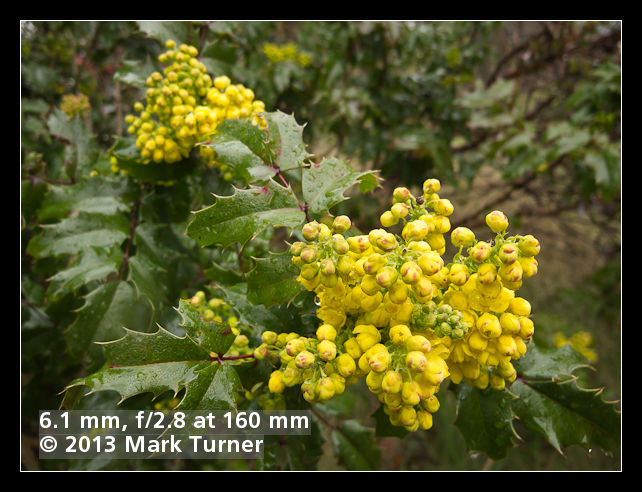
One of my readers asked me recently, “How do I control depth of field and get a fuzzy background in my photos?” It’s a technique I use a lot to help create contrast between subject and background. This month I’m sharing the secrets to this professional tool.
First, a definition of the term. Depth of field describes the area in front of (closer to the camera) and behind the subject that appears acceptably sharp when the lens is focused on the subject. We often describe it as “shallow” when only the plane of focus is sharp, and “deep” when more elements in the photo in front of and behind the subject are sharp.
I’m a big fan of doing all the necessary preparation work to capture my vision in a single exposure, with all the elements in place in the instant the shutter is open. But sometimes that just isn’t possible and I rely on some of the digital magic that allows me to combine multiple exposures into a single finished image.
There are three main reasons I’ll create a composite image:
Subjects, particularly in a large group portrait, don’t all cooperate at the same time
The brightness range in the image is greater than my camera’s sensor can accommodate
The subject is too large, or the working space too small, to fit into one frame
The key to creating a composite digital image is planning ahead. It’s not something you can do successfully, and believably, without knowing where you’re going. I always use a tripod so as many elements as possible line up perfectly.
Unless I’m going to use High Dynamic Range (HDR) techniques to fit a wide brightness range into a single frame I make sure my exposure is that same for each frame that I’ll be blending. That almost always means manual exposure and a constant aperture. I don’t touch the zoom on my lens and I keep my lighting the same.
Let’s examine each of these three variations on blending multiple exposures. Continue reading →
My lecture and workshop schedule is shaping up to be busy this year. I hope you’ll be able to join me for one or more of them.
I’ll be teaching photography classes for people with digital SLRs, pocket cameras, and iPhones. My native plant lectures include the dry area in central Washington and the region within walking distance of high tide.
I love to teach and my students consistently report how much fun they have and how much they learn in my classes.
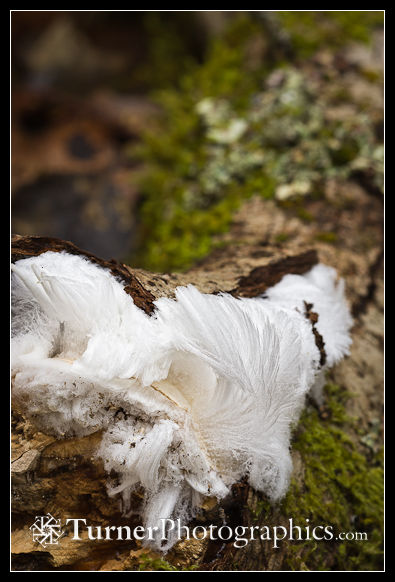
I’d never heard the term “frost flowers” until one of my editors and customers requested photographs of the phenomenon late last year. This is a natural phenomenon that occurs during the freeze-thaw cycle, or at the beginning of winter in places that don’t cycle through warm and cold periods. Continue reading →
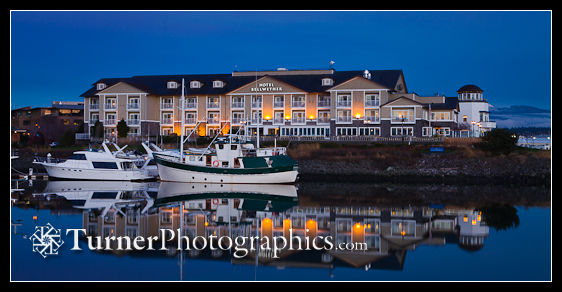
I’d never make an astronomer. I go to bed too early. That makes it challenging for me to make images at dusk in the middle of the summer when it stays light until ten o’clock. This time of year, with darkness sneaking upon us soon after four o’clock, I can photograph at dusk and still be home for dinner.
Hotel Bellwether at dusk
Architectural photographers often photograph buildings at dusk. The rich blue of the sky contrasts with the warm tones of artificial lighting illuminating a building and coming from the interior through the windows. There’s not a lot of time each day when the conditions are perfect to get that balance right.
You’re the designated family photographer and historian. You’re the one your mother is going to call to say, “Remember that deep-fried turkey we had for Thanksgiving a couple of years ago? Can you send me a picture?”
If you have an organized filing system for your photos you’ll be able to say, “Sure. Do you want me to make a print or just send you a digital file?” Then you’ll go to your computer, quickly pull up the Thanksgiving photo and get a copy on the way to mom. Continue reading →
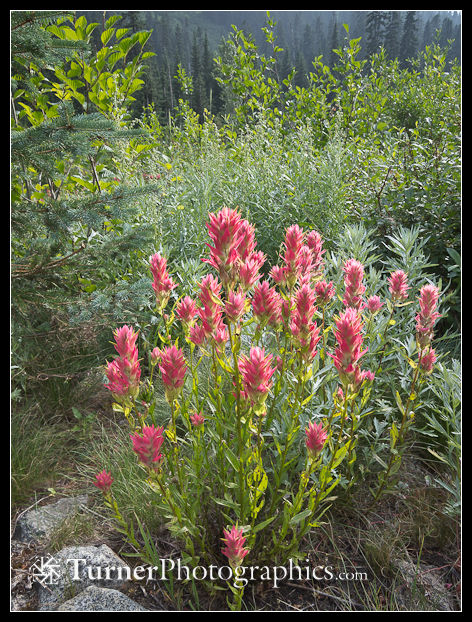
Giant Red Paintbrush is a strong foreground subject, placed in context with its environment and highlighted by back lighting.
As my three-day wildflower photography workshop at North Cascades Institute last summer came to an end one of my students asked a version of the proverbial question, “Which came first, the chicken or the egg?” She didn’t put it quite that way, as she was inquiring about the sequence of steps I follow in going from an idea to a finished photograph. My student was perhaps slightly confused because we’d spent the first part of the workshop discussing technical matters like white balance, aperture, and shutter speed before moving on to what I consider the meat of the course: creative choices. Continue reading →
Photographers, and artists of all kinds, learn to see light. We look at where it’s coming from, how it plays on our subjects, and how much contrast it yields.
I made this series of images last week during the field demonstration part of my pocket camera wildflower photography class at the North Cascades Institute while my students watched me work. They looked at the images immediately on my iPad so they could compare what they saw from where they stood with what I was getting as I moved around my subject and then used a couple of diffusers on a close-up.
Photographer’s Shadow: Front Light
We were at the Bridge Creek trailhead, where the Pacific Crest Trail crosses Washington Highway 20. These Giant Red Paintbrush (Castilleja miniata) were just a few feet from the edge of the parking lot. It was about 9:15 in the morning under a cloudless blue sky, so the sun was about 30° above the horizon and more than halfway to its peak. In short, the sunlight was strong, high, and bright. In the first photo you can see my shadow as I stood with my back to the sun. Continue reading →
I love long northwest summer days with clear blue skies and warm sunshine until late in the evening. I just don’t like photographing under those conditions. Bright mid-day sun isn’t flattering to people, pets, plants, or landscapes. Yet there are times when schedules dictate working under these challenging conditions. Here are seven tips for making great photos even in the middle of the day. Continue reading →
Ramp up your photo skills this summer by taking a class.
I love to teach and share what I’ve learned with others. I finished one class last month, but there are still three more chances to spend some time learning about flower photography with me in July and August at fantastic locations in Oregon and Washington. Continue reading →


![1204906 John Day River [panoramic merged] [Juniperus occidentalis]. OR 19, Kimberly, OR. © Mark Turner](/wp-content/uploads/2013/03/1204906_pan.jpg "1204906 John Day River [panoramic merged] [Juniperus occidentalis]. OR 19, Kimberly, OR. © Mark Turner")