Rainy Summer

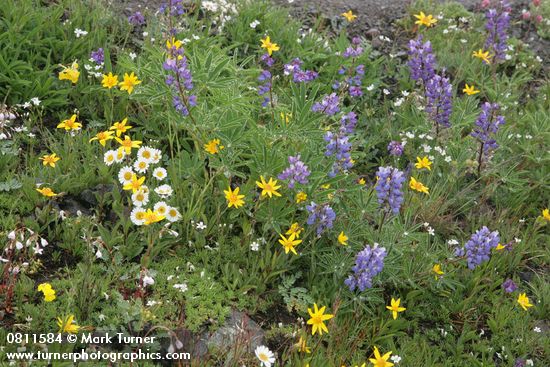
Olympic Alpine Meadow in the Rain

I used to joke with friends from the dry side of the mountains that it stops raining on July 7 and stays dry through most of September in Bellingham, the North Cascades, and the Olympics.  Well, not this year.  It’s been one of the coolest and wettest summers I can remember. The photo was made near the summit of Mount Townsend in the Buckhorn Wildnerness of Olympic National Forest in late July. It was pouring rain mid-day, and continued for most of the afternoon. And this is on the dry side of the Olympics.
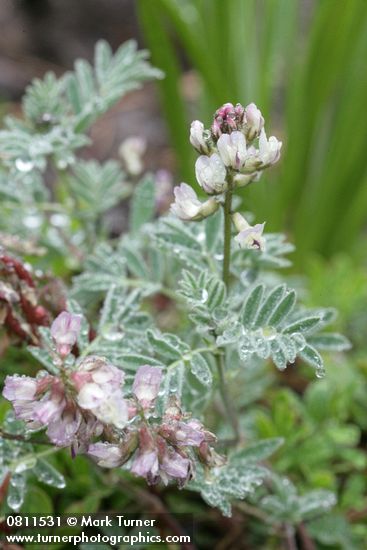
Olympic MilkvetchThose of us who live on the wet west side of the Cascades learned quickly that if we stay home because it’s raining we’ll never get out and do anything. That doesn’t mean it’s more fun to go out in the rain, just that it’s a fact of life. The hike to Mount Townsend was a Botany Washington field trip to see the diverse alpine flora, including the rare and endemic Olympic Milkvetch (Astragalus cottonii). We found it before the rain started, but glistening with dew drops from the cloud that enveloped us. This was the first time I’d seen this species in bloom, although I’d seen its very showy inflated seedpods a few years ago on another Olympic hike.

While rainy days are challenging for photography in some ways, the soft light really opens up the shadows and makes it possible to capture every detail. Colors are rich and saturated and everything glistens with the raindrops. It helps when the rain comes down very softly and without any wind.

I use a cheap plastic camera cover when working in the rain.  It cinches down around the lens hood and has a small hole to go around the viewfinder. While it doesn’t keep the camera completely dry it helps a lot. I have to remember to check the lens frequently for water droplets, which create big soft spots.  That can be a nice effect if it’s deliberate, but more often I just miss seeing them through the viewfinder and find out later that I had a problem.

When we got off the trail I set all my gear out to dry overnight, spreading it around my host’s living room. Come morning there was still a lot of dampness, but the sun had returned. I headed back up to the mountains and started shooting again. Soon I thought everything looked fuzzy. I checked the lens and discovered that there was condensation inside. I switched lenses and set the damp one in the sun to dry out, which it did in fairly short order. I’d had that happen before and have never noticed any long-term problems.
Soft Background with a P&S

Most of the time I’m photographing with a big and heavy digital SLR.  The quality is incredible and I love the results.  But it’s a heavy thing to lug around.  Sometimes it’s fun to go light and just carry a pocket digital camera.  In my case, it’s a Canon S70 that I bought in 2005.

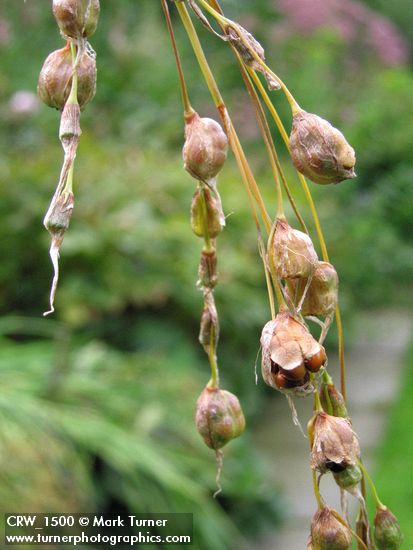
Fairy Wands Seeds There are some things that the little camera does very well and others that are more challenging. This shot, of Fairy Wands seeds, is one of those things that’s more difficult to do with a pocket camera for a couple of reasons. First, it focuses closest at the widest setting of the zoom lens. Second, the sensor is pretty small. Both factors generally lead to great depth of field so blurring the background is hard to do.
For this shot, I used the manual focus mode and set it for as close as it would focus, which is only 2-3 inches from the front of the lens. I used aperture priority and set it for f/5, about the middle of the range. Then I moved in until the seedpods looked sharp on the LCD on the back of the camera. Since I was moving and the wind was blowing the seeds around I shot a bunch of frames to get a good one. I find it very hard to confirm sharp focus with the LCD. At least today it was cloudy so the display was more visible.

The photo was made at the Bellevue Botanical Garden perennial border.

Oregon Cascades

Posted on by

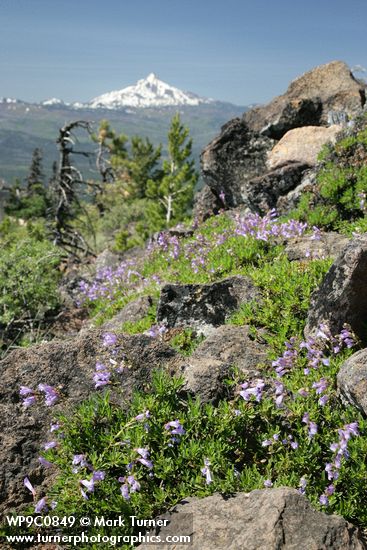
Davidson’s Penstemon on Black ButteI spent the last week, from July 7 to 14, photographing gardens in Bend, Oregon and wildflowers in the Western Cascades. It was a very productive 8 days with repeat visits to some gardens I’d photographed last August and several new gardens that I’d been told about since then. On the days I was shooting gardens I started work at 5:30 am to take advantage of the soft early morning light before the sun rose above the trees. I took a mid-day break for breakfast and scouting locations, and then worked from about 5:30 pm until nearly dark. After returning to the place I was staying I had to copy all the day’s work over to my computer and back it up, so I didn’t get to bed until after 11 pm most days. That made for very long work days.
On Thursday I didn’t have more gardens to scout so I drove west to Black Butte and hiked to the top to see what was blooming. The photo here was made from the summit, with Penstemon davidsonii (Davidson’s Penstemon) nestled among the volcanic rocks and Mount Jefferson in the background. The view from the top of the butte is spectacular, with the three Sisters, Mt. Washington, Mt. Jefferson, Mt. Hood, and Mt. Adams all visible on a clear day. I photographed a number of wildflowers on the 4-mile hike, including two species that were new to me. One is a regional endemic, Penstemon peckii, that was fairly common along the trail. The other is a member of the nightshade family that I spied while sitting down to key out a lupine. I’d never heard of Leucophysalis nana, Dwarf Chamaesaracha, but recognized the flower as being characteristic of nightshades and was able to key it out under the former name Chamaesaracha nana. I’ve seen and photographed a lot of flowers so it’s always exciting to find something new.

Over the weekend I participated in the Native Plant Society of Oregon annual meeting in Eugene. We visited the native plant nursery at Mount Pisgah Arboretum on Friday afternoon, botanized on the trail to Moon Point on Saturday, and on Patterson Mountain on Sunday. Monday I stopped for a full day of hiking and photography on Iron Mountain.

It’s going to take several days of office work to get everything captioned and uploaded so people can see the images. But that’s going to have to wait as I prepare to head east to Christina Lake, BC for another garden shoot on Friday.

South Lopez Island

Posted on by

A couple of days ago I went out to Lopez Island with a couple of friends to see what might be blooming on the open rocky bluffs along the shore at the south end of the island. There are a couple of public parcels managed by BLM, Iceberg Point and Point Colville.
Puget Sound Gumweed at Point Colville
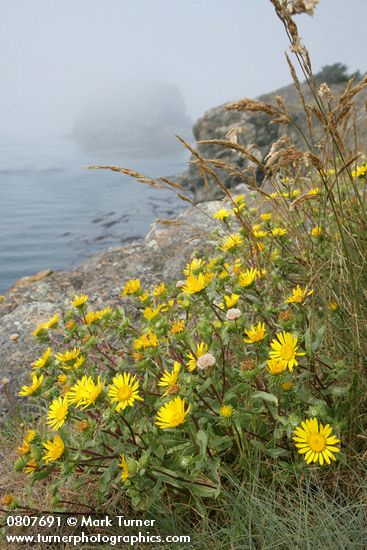
We went to Point Colville, where there’s a trail through the forest from the road down to the bluffs. The woods are fairly mature second-growth Douglas-fir with a little Sitka Spruce. Woodland Tarweed and Twinflower were blooming profusely along the way. It’s not a long walk, and the area doesn’t get a lot of use. The photo is of a clump of Grindelia integrifolia, Puget Sound Gumweed perched on the edge of a bluff with Castle Island peeking through the morning fog in the background. We were blessed with this nice soft light filtered through thin clouds and coastal fog for most of the day.

The San Juan Islands are in the rain shadow of the Olympic Mountains so they are quite dry. It was warm and hadn’t rained for some time when we visited so the meadows were crispy with maturing grasses when they weren’t carpeted with the rather fragile Reindeer Lichens (mostly Cladonia portentosa ssp. pacifica). The most interesting plants were blooming in cracks in the rocks where their roots could reach down to cooler soil and little pockets of moisture. In addition to large quantities of Gumweed, I found a few nice clumps of Scotch Bluebells, a mass of Yerba Buena, and lots of Nootka Roses in their prime. The roses were growing mostly in deeper soil, often where they were a little bit protected by Douglas-firs.

We spent all day at Point Colville, never making it down to Iceberg. My friends were concentrating on the lichens while I sought out the flowering plants. I had hoped to find Opuntia fragilis which is on the island, but apparently not at Point Colville. My Pacific Northwest Wildflowers website has two galleries for the day — one for the wildflowers and another for the lichens. Browse the photos for July 2, 2008 to see them.

Prickly Pears

Posted on by

One of the plants on my list to find and photograph has been Opuntia fragilis, fragile prickly pear cactus, which grows on both sides of the Cascades in Washington and other places in the Northwest. I’d seen it, or at least thought I had, in a couple of places but never found it in bloom until this month.

Opuntia columbiana

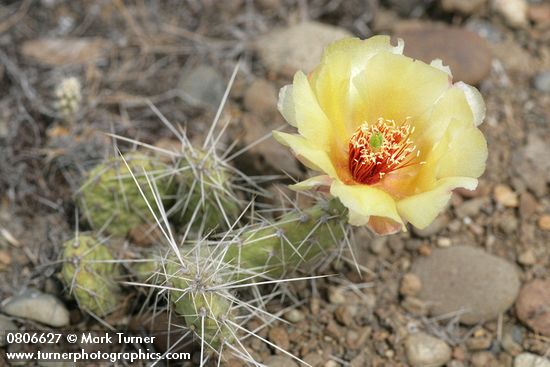
I say I thought I’d seen fragile prickly pear because that’s how a bunch of it in Yakima Canyon keyed out in Flora of the Pacific Northwest. The photograph above is from the Umtanum Recreation Site about halfway between Ellensburg and Yakima where the cactus grows next to the campground. However, I’ve since learned that these plants are actually Opuntia columbiana, grizzleybear prickly pear. The pads are flatter than O. fragilis and some authors say it’s a hybrid species. Others write it as Opuntia x columbiana, indicating that it’s a proposed species. Still others call it O. erinacea var. columbiana. No wonder I was confused. I found a web Primer on Washington Native Cacti that helps to sort them out. See more photos of the Yakima Canyon cactus on my Kittitas County June 19 page on the Pacific Northwest Wildflowers website.

Since my photos from Yakima Canyon weren’t what I thought they were, I headed out again yesterday afternoon in search of the real thing. I went to Ebey’s Landing National Historical Reserve near Coupeville on Whidbey Island armed with GPS coordinates interpolated from WTU Herbarium botanical foray records from 2004. The species is somewhat rare, classified in Washington as a species of concern, so exact locations aren’t published. I had looked for O. fragilis at Ebey last month and didn’t find it, but this time I located it where I’d seen it several years ago just above the logs at the back of the beach. The specimen didn’t look very healthy and wasn’t in bloom. Since the steep sandy slope is somewhat eroding, although held in place by grasses and other plants, I thought there must be more plants straight up the hill.

Opuntia fragilis

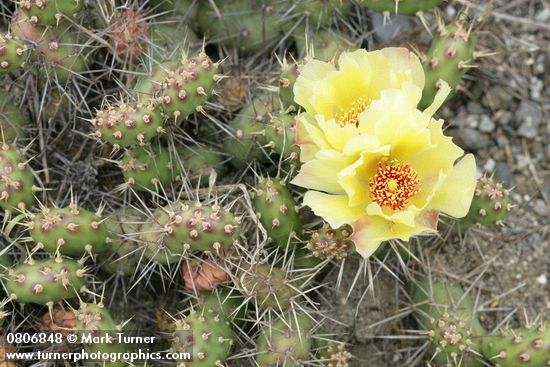
I left my pack and tripod on the beach and headed up, keeping a sharp lookout for cactus, especially for the showy yellow flowers. This photo is from the first clump I found, about 50 feet above the beach. Notice how fat and rounded the pads are. O. fragilis doesn’t form very large clumps and they aren’t very tall, so the browning grasses on the hillside kept the cactus mounds rather well hidden. As I looked up the hill I spotted several more cacti in bloom. At that point I returned to the beach for my camera pack and tripod and went to work.

When I find a plant of interest I try to photograph it from several angles, showing foliage (or pads in the case of cacti), flowers, details, and a habitat view. I used three different lenses on this plant — a 90 tilt-shift, 24-105 for wide views, and a 100 macro. An overcast sky made nice soft light, but the habitat view wasn’t as interesting as if the sky were clear and the water reflecting blue. See the whole set on my Ebey’s Landing page.

I also found other plants I associate more with the dry east side of the mountains, including tapertip onion (Allium acunimatum) and harvest brodiaea (Brodiaea coronaria). It seems counterintuitive to have a desert just above the beach, but Ebey’s Landing is in the Olympic rain shadow. Weather data for Coupeville shows about 20 inches of rainfall annually and the soils on the bluff at Ebey are sandy and well-drained.

Nearly 3000 Photos in May

Posted on by

I’m working furiously to get caught up on captioning after a very busy spring out photographing both gardens and native plants. I think I’ve finished with May and a quick database query shows 2,947 photos captioned for the month. That’s a lot of shooting time, and a lot of time spent in front of the computer figuring out what plants I shot and entering captions in my database and into the digital file metadata fields.

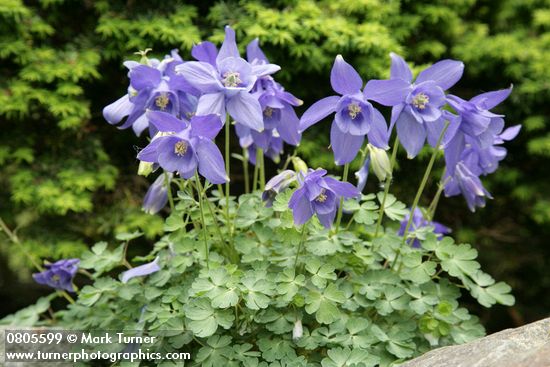
Dwarf Columbine

This little Columbine, Aquilegia bertolonii, was photographed at the end of the month in a garden near Bellingham that has lots of interesting species, including rock garden gems, Rhododendrons, and a large number of dwarf conifers.

In May I photographed in eight private gardens and two public gardens. I visited seventeen locations for native plants across Oregon, Washington, and British Columbia. I may not make it to quite as many locations in June as we’ve had some miserable weather early in the month and I’ve been chained to the computer. Most of the native plants are now online at Pacific Northwest Wildflowers and the rest of them will eventually make it into the galleries there. I’m farther behind in getting the gardens online, but the east-side gardens are at Inland Northwest Gardening.

Occasionally I get e-mails from someone who’s seen either my garden or wildflower photography and wants to know what some plant is that they’ve seen. I do my best from the JPEGs they send and sometimes have a good idea what it is they have. Other times I’m completely baffled, particularly when it is something found far from my personal experience. With garden plants it’s particularly hard because there are so many named cultivars besides the species. Sometimes I can only get a plant to family or genus. It’s a lot easier to identify plants in the field when you can see all the pertinent characteristics. Most people don’t photograph plants with an eye to identification later.

Selections for a Wantlist

Posted on by

I’ve been spending too much time on my butt in front of the computer the last few days, mostly selecting photos to send to magazine editors for upcoming stories. In the end, there should be some sales, but right now I’m tired of sitting. In the old days I got some exercise in the process of pulling slides to send out since my light table is in the next room from the shelves of slides. Now I mostly just sit and wiggle the mouse. I still have to look at a lot of images to select those that best fit the request. Some of these wantlists run two or three single-spaced pages, so it gets tedious. It’s a good job for a rainy and windy day, which we’ve been having several of lately. With luck I’ll get caught up with all the requests before the weather improves and I can get back out shooting again. Requests always seem to bunch up. I’m pulling images for September issues currently, which includes some winter bulbs photographed in February and early March. When the originals are on film then I have to scan and optimize them, add metadata, and file them in my storage directory structure before I can add them to a digital submission. No one seems to want film any more.

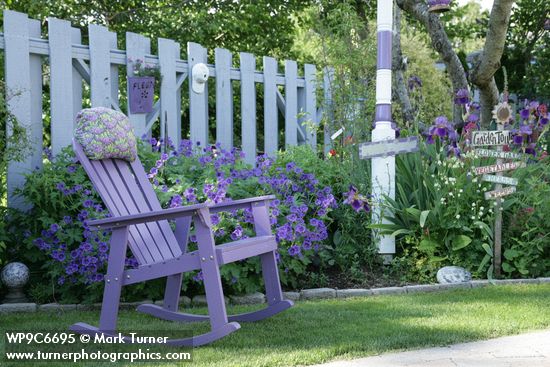
Purple Garden

I did enjoy the Saturday afternoon Whatcom Horticultural Society advance tour of the gardens that will be open on June 21 and 22. I shot a few photos for the WHS website and put together a short slideshow that I posted to YouTube. It’s linked on the WHS site. The six gardens are all quite different and worth visiting if you’ll be in Bellingham that weekend. The photo is from one of the tour gardens.

Value of Backups

Posted on by

I’ve been working this week to prepare optimized high-res files for delivery toGarden Picture Library, one of the stock agencies that represents some of my work. These are garden photos from 2006 (I’m a bit behind) that are stored on an external Netgear NV+ Raid 5 storage device. In the process of working with the files, using Adobe Bridge and Photoshop CS3, a handful of the image files have been corrupted. I don’t know quite why it’s happening, or when, or whether it’s related to the software or the external storage or the network. And since it only affects a few of the files it’s very hard to track down.

Fortunately, I have backup DVDs of all the images and I knew where to find them. I was able to restore the backup of each affected file, put the metadata back in (the backups were made before the images were captioned and keyworded), and resume working. It was frustrating and tedious but at least I didn’t lose anything but a few minutes time. However, I’ve been relying on the RAID to provide some measure of file security and it’s obvious I really need to have it backed up to other storage as well. The box holds 1.5 terabytes so backing it up is not going to be trivial.

Hooker’s Balsamroot on the Wild Horse Wind Farm

I’m pretty sure there’s a high level of redundancy in the operational and control systems for our power company’s generation facilities, including the new Wild Horse Wind Project east of Ellensburg where this photo was made last month. That redundancy helps assure reliability, which is important whether your business is big or small.

Golden Paintbrush

Posted on by

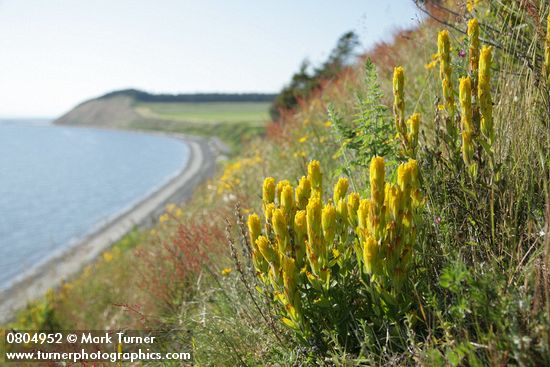
Golden Paintbrush

Sometimes plants raise many questions when we find them in the field.  Castilleja levisecta, golden paintbrush, is a rare species that is only found in a very small number of places and in some of those there are only a few plants. I visited one of those sites last week to make the photograph above and spent about an hour working with the plants on a windy late afternoon. The location is hazardous and not one I’d recommend visiting as the slope is steep and slippery.  I almost wished for crampons and a belay as I carefully placed my feet to avoid damaging the habitat.

At this particular location golden paintbrush is quite prolific, but only within a small area on the bluff. Go just a short distance north or south and the plant is nowhere to be found. Why does it apparently thrive there and not elsewhere? The slope, which is rather sandy soil, is slowly eroding back away from the beach. How does the paintbrush deal with this natural force? Paintbrushes are hemiparisitic, forming a relationship with a host plant to help them extract nutrients from the soil. But they aren’t super picky about the host, growing with a number of grasses, Artemisia species, and Oregon sunshine. What is their preferred host here? There are both grasses and Oregon sunshine on the slope and I found golden paintbrush among both.  I also found weedy introduced species like Rumex acetosella, sour dock, on the slope.

This area has had human influence a long time, by white settlers and by Native Americans before them. But the bluff is probably infrequently visited.  Work is underway to reestablish golden paintbrush in other locations throughout its former range from seed collected in places like this, propagated in a greenhouse, and then planted out. There’s been some success getting the transplants to grow, but it’s a long slow process.

Don’t Get Stuck

Posted on by

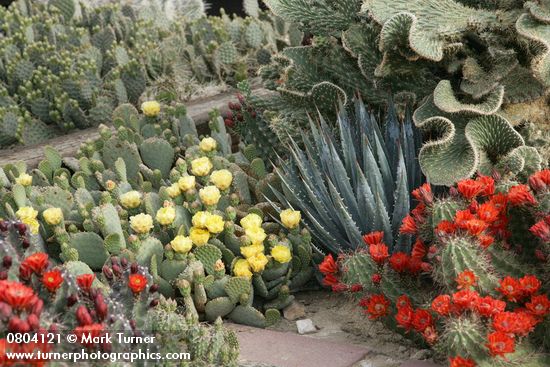
I had the opportunity in the past few days to help a couple of amateur photographers solve problems related to digital photography. Just like handling cactus, you have to be careful not to get stuck. The photo below is of a portion of Ron McKitrick’s Hillside Desert Botanical Garden in Yakima, Washington. You can see more photos of his remarkable garden on the Inland Northwest Gardening website.

Cactus Garden

The first problem was one of deleted files on a camera memory card. The photographer had handed her husband the full SD card from her camera to transfer all 180 or so photos to their computer. He uses Picassa to import photos from the card and saw previews of all the photos on his screen. Thinking all the photos had been transferred he handed the card back to his wife. She put the card back in her camera and reformatted it. That’s a good practice — copy everything to the computer and then reformat the card in the camera just before use.

Unfortunately, when he went back to view the photos only the first nine were on the computer. Apparently all the images weren’t transferred when he thought they were. He was seriously in the doghouse now as the photos included several months of skiing and hiking trips that couldn’t be reshot. I asked her whether she’d shot any new photos on the card since reformatting it. She hadn’t, so there was a good chance the missing files could be recovered.

When a memory card (or disk drive) is formatted all the previous data is not erased. Only the directory structure is rewritten. That means that with the right tool you can often recover deleted files. I recommended that my friend download a copy of Photo Rescue software. I had it on my laptop, but had no way to read a SD card. The program is pretty easy to use and will show you whether your files can be recovered before you have to spend money to register the software and save your recovered files. In this case it took over half an hour for it to recover the files and show thumbnails of all 180 missing photos. After paying the registration fee my friend was able to save all his wife’s photos and put a smile back on her face. There are other software tools out there that do the same thing, but this is the one I keep on my laptop in case I do the same thing sometime (and I have).

Continue reading