Autumn Color

Bigleaf Maples among Conifers

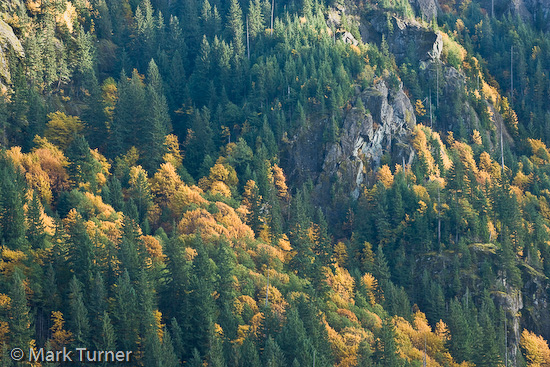
The Pacific Northwest isn’t known for fall color the way New England is, but we still get our share of brilliant yellows and oranges. The color here is from Bigleaf Maples (Acer macrophyllum) growing on a steep hillside above the Baker River. I shot from across the river with a 70-200mm lens and worked over the image in Lightroom to improve the contrast and saturation.

It’s getting toward the end of the foliage season, and most of the maples around Baker Lake and along the Baker River trail today had already lost most of their leaves. The Vine Maples were nearlybare, with just a few lingering leaves showing pale color. I’d hoped there would be more interesting foliage when I set out for a hike today, but it was mostly disappointing photographically.

All was not lost, as it was a very pleasant day for a walk in the woods. The clouds lifted mid-day and the sunshine highlighted the moss-covered tree trunks. I found a couple of species of coral fungi and maybe identified one of them in my copy of David Arora’s Mushroom Demystified. There were some other mushrooms along the way, but mostly past their prime or so small as to not be particularly interesting.

At the end of the day I drove up to Baker Hot Springs to see if it had been dug out after being filled in by a winter storm a few years ago.  The pool was back to similar size to what I remembered and I sat and soaked a while before heading home.
Mt. Baker from Bellingham Bay

Mt. Baker from Bellingham Bay

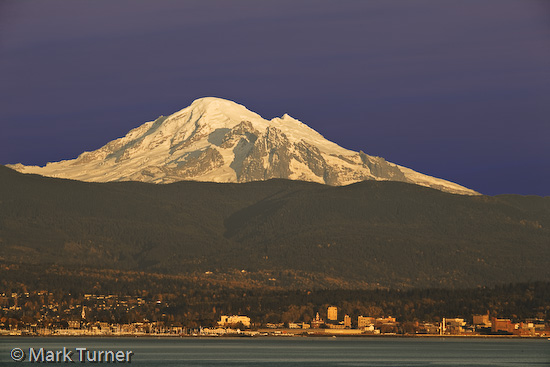
This afternoon was a glorious blue-sky sunny autumn day with temperatures in the low 50s. Perfect for a bike ride around Lummi Peninsula. I chose to ride counter-clockwise for the first time in many visits to this regular loop, so I came back along Lummi Shore Road. The view from the road is across Bellingham Bay to Mount Baker. I was pedaling briskly, but able to enjoy the spectaular view of the mountain at the same time. The water was nearly totally calm, unusual for the bay, and the sky was a cloudless rich blue.

When I got home I decided I needed to return with my camera for the late afternoon light. I parked at one of the higher points along the road so I could look down on the water as well as across the bay to Bellingham and the mountain. Unfortunately, by 5:45 pm the sky had some high cirrus clouds and light haze over the mountain. The view just wasn’t as dramatic as I had envisioned. Always the optimist, I set up and made a series of exposures as the sun went down. I shot with my 70-200mm lens, coupled with a 2x teleconverter for many frames (including the one here).

I waited a while after the sun left the mountain to see if the sky would get interesting in that time between the sun dropping below the horizon and darkness. The clouds over Lummi Island were OK, but not spectacular. Over Baker there was nothing interesting going on so I headed home.

The frame here has benefitted from some work in Adobe Lightroom and Photoshop to enhance the color of the sky and improve the contrast of the forested hills and the city buildings. It’s closer to what I envisioned than the raw camera capture.

And the bike ride?  I set a new personal speed record for the year, averaging 18.9 mph over about 32.5 miles. Much of the time I was riding 21-22 mph on the flatter sections of road. There are no big hills, just a few gentle upgrades on the route.

Mt. Baker

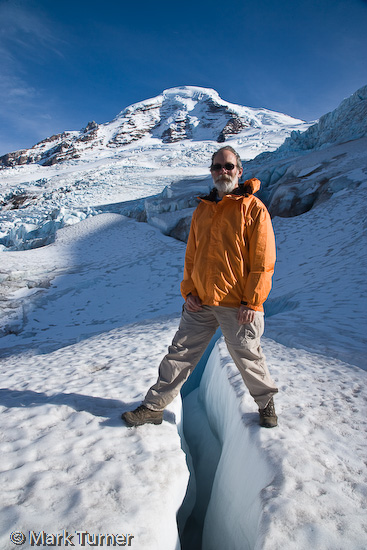
Self Portrait below Mt. BakerMid-October is getting toward the end of the good weather in the North Cascades. I took advantage of a nice day today to head up toward Mt. Baker to photograph the mountain and the rugged crevasses and seracs on the lower portion of the Coleman glacier. I made this self-portrait at the high point of my hike, a bit over 5900 feet elevation. The crevasse I’m stradling wasn’t very deep so I felt comfortable going out on the glacier by myself without an ice axe. However, I didn’t go any farther than where I’m standing.

The weather wasn’t as good as I’d hoped for. The blue sky in the photo was only in evidence for a short time about 3 pm, but it couldn’t have been timed any better. Most of the time the sky was a hazy white with thin, high clouds signaling an approaching front which will probably bring rain on Monday.

The Coleman glacier, which flows north off Mt. Baker and terminates into Glacier Creek, is heavily crevassed and the lower portion has substantial seracs. A climbing class of more than a dozen students was busy practicing their ice climbing on the glacier below me. I tried that once, in about the same place, and decided ice climbing isn’t for me. Maybe I gave up too easily and I should try again.

Several creeks cross the Heliotrope Ridge trail as it winds its way up toward the glacier. The higher elevation crossings were challenging because of ice on the rocks. In mid-summer the challenge is huge water flows from melting snow, but that wasn’t the issue today. In one case I threw a bunch of small stones at the ice to break it off the rocks so I could have a firm place to stand mid-stream. I really didn’t want to get wet or injured.

All told, I hiked about 6 miles with 2300 feet of elevation gain and loss today. If I hadn’t gone to the mountains I could have gone kayaking, bicycling, or worked in the garden.

Toad Lily

Toad LilyToad Lilies are bulbs that bloom late in the season, adding a little color during that transition period between summer and autumn here in the Northwest. There are several species and varieties, but from the ones I’ve seen, they’re mostly shades of purple, with up-facing blossoms on stems that are about waist high or a little higher.
This blossom was one of many in a lush clump of Candelabra Toad Lilies, Tricyrtis macropoda, along the path at the University of British Columbia Botanical Garden this afternoon.

I was on my way back to the car at the end of the day when I saw gentle backlight coming through the blossoms and decided I had time for a few more photos since I was already going to be late for dinner. I made several variations on the theme, horizontal with multiple blossoms, horizontal with just a single blossom, and then verticals with one blossom. I liked this one with a tiny spider crawling across a strand of silk, although I have another variation with neither the spider nor the silk. Fortunately it was a dead calm afternoon as the light was fading, the flowers are on tall stalks, and I was working close with a 100mm macro lens.

Red Chairs

Red Chairs

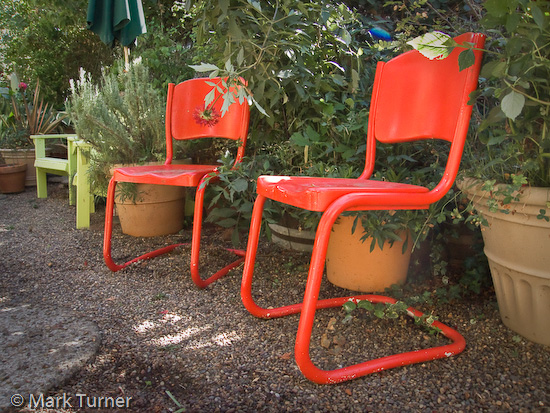
I think a little boldness in the garden is a good thing. This pair of old red chairs, from a garden in Eugene, Oregon (that I also found on https://emfurn.com/), establish that bold can be stylish and fun.

I found these chairs along the south side path in a tiny city lot garden jam-packed with plants. The owner told me she has some 250 varieties of roses, but you’d never know it in September when they’re out of bloom. A big eucalpytus stood at the corner of the house by the entrance gate, much taller than she ever expected it to grow when it was planted. This was definitely a personal garden, not one designed and installed by some fancy designer. It grew organically around the whims of the owners over many years. I like that.

The photo is from my Canon S70 pocket camera, hand held on the Garden Writers Association bus tour to Eugene on September 23.

Mountain Ash at Dusk

Mountain Ash Berries

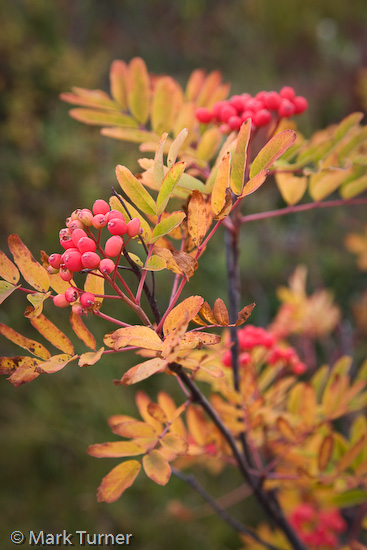
As the sun goes down the colors our eyes perceive, as well as what a camera records, changes. These Sitka Mountain Ash (Sorbus sitchensis) berries were along the paved path at Picture Lake last Saturday. I photographed them about 7:00 pm, which was just a few minutes past sunset.  However, the sun had descended below the adjacent ridge long before, plunging my subject into deep shade.  With a digital camera it’s easy to compensate, but in this case I left my camera’s white balance set to daylight, letting the color go a little blue.

Is this an accurate representation of what my eyes saw? Probably not, but color memory is a fickle thing so it really doesn’t matter.  If the color of the berries was far around the color wheel from red then we’d know something was wrong. But since they’re red then we accept the color as more or less correct.

Mountain Ash is in the rose family. The fruits are reportedly edible, sour but becoming sweeter after a frost. I’ve never tried them. One website even talks of making Mountain Ash Wine. I suppose one can ferment almost any fruit so why not this one. The berries are certainly abundant this time of year, more so than the huckleberries for which so many people go foraging.

Available Darkness

I went up to Picture Lake yesterday for autumn photos of Mt. Shuksan.  The place was mobbed in mid-afternoon when the light was nice on the mountain, with photographers everywhere.  Many failed to heed the “stay on the trail” signs, trampling a delicate resource.  Shame on them.

Mt. Shuksan at Twilight

I made my sunny afternoon photos, then headed on up to Artist Point for more variations. Did I need more Shuksans? Probably not.  Could I resist a beautiful sunny day under blue skies with early-peak fall color?  No.  So I shot with a variety of foregrounds until the sun went down.  Then I headed back down the road to Picture Lake.

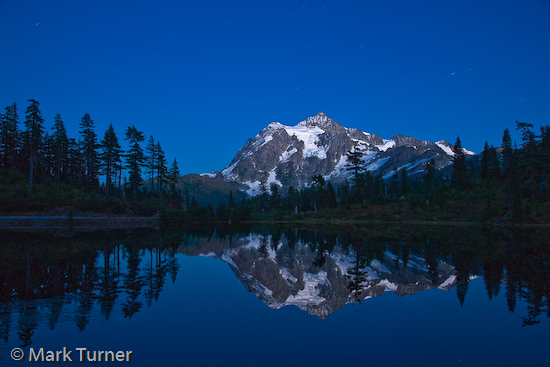
By this time the sun was off the mountain but the sky was still light.  There were two other photographers still working from the paved viewing platform and I eventually joined them for the view of the mountain reflected in the perfectly calm lake. Both of the others were advanced hobbiests, one shooting with a 6x17cm back on a 4×5 view camera and the other an advanced Canon digital body.  They were both planning to stick around to shoot star trails on the moonless night.  I was tired and hungry (you’d think I’d learn to always keep some food in my camera pack) so I didn’t stay that long.

The photo here was made about 7:45 pm, with a 90-second exposure. One of the really nice things about digital is there’s no reciprocity law failure like there was with film.  No extra exposure needed, no weird color shifts. In the original you can see the beginnings of star trails.  I couldn’t see the stars above Shuksan with my naked eyes while I was shooting. Speaking eyes, mine are getting definitely older so I have more trouble focusing than I used to. Autofocus doesn’t work very well in near darkness.  Note for the future:  prefocus the camera before it gets dark and then turn autofocus off.

Six Days and Sixty Gardens

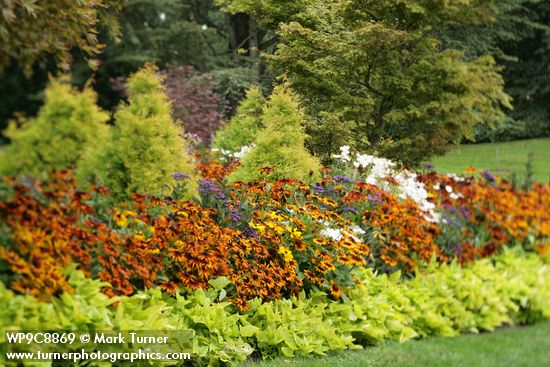
The last week has been a whirlwind of garden touring. While I may not have visited a full sixty gardens there sure were a lot.

Gloriosa Daisies and Sweet Potato Vine

I started last Thursday with an afternoon in Vancouver’s Queen Elizabeth Park where the lush tapestry of annuals and a modicum of perennials were in their late summer glory. The photo here is of gloriosa daisies with sweet potato vine, shot with my 90mm tilt-shift lens cranked over for a selective focus effect rather than to keep the entire subject sharp. The soft overcast light was very welcome.

On Friday I headed down to Portland, Oregon for the annual Garden Writers Association annual symposium. Saturday we toured several northeast Portland gardens. David Perry and I photographed each other photographing the gardens for the intro slide show to our Sunday morning presentation on making magic with your point & shoot camera. It was a lot of fun working quickly and hand-held. David and I shot some of the same subjects, but saw them completely differently. We each got lots of pats on the back for our program and we saw people putting our suggestions to use when we headed out for the afternoon’s tour.

Sunday afternoon we visited Iseli Nursery and Terra Nova Nurseries, both wholesale growers with well-designed display gardens and fantastic plants. The rain held off until we got back on the bus. Isley specializes in dwarf conifers and Japanese Maples; Terra Nova is best known for introducing exciting Heucheras and other perennials to the marketplace.

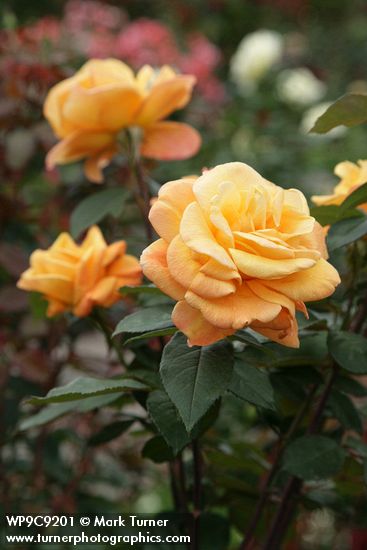
‘Strike it Rich’ RoseMonday our busses took us to the Portland Classical Chinese Garden, the Portland Japanese Garden, the International Rose Test Garden, and the Oregon Zoo where we had dinner. Tuesday we went to several private gardens in Eugene. This morning I went back to the rose garden to make some specimen photos and worked until the wind picked up and I decided I needed to start north to get through Seattle before the traffic got too bad.

Too Much Sun

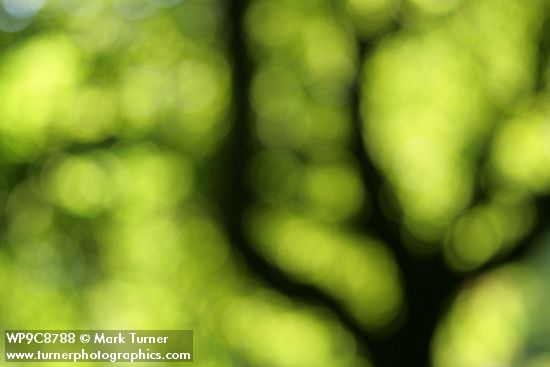
Tree Pattern

I was in Seattle earlier this week and stopped by the Washington Park Arboretum to see what I could find. It was what most people would call a glorious day, full sun under a brilliant blue sky and pleasant temperatures. Fall color hadn’t started happening yet and very little was in bloom. In short, the conditions were less than prime for my kind of photography.

I wandered down to the end where they’re constructing the new Pacific Rim Connections garden, which still had a fence around it and wasn’t open yet. But across the road I was struck by the pattern of the shadows a large Madrona tree was casting on the lawn. That’s not the picture here, but it’s what got me started down a different path that day.  I made several images of the shadows on the grass, then headed up Azalea Way back toward my truck.

Along the way I noticed the light coming through the leaves of a large tree. When I aimed my camera the lens was set for a much closer distance and I saw something similar to the photo here — just a soft pattern of branches and greens. I experimented with several variations of focus and aperture. This is the one I liked best out of the bunch.

It seemed odd to use one of my sharpest lenses to shoot a totally out-of-focus photo, but that’s what I did. Sometimes I have to remember to play and not to get hung up on what’s “right” and what’s “wrong” in photography. Thanks, David for reminding me of that a few days earlier.

Opposites

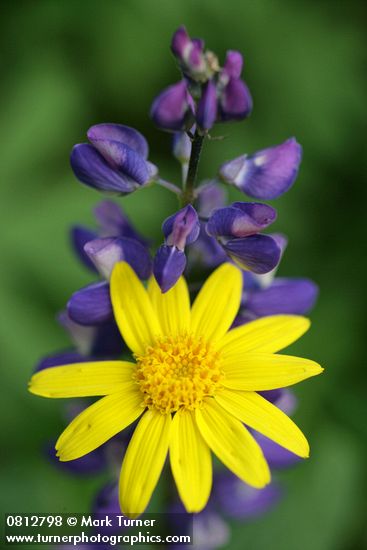
Mountain Arnica and LupineColors on the opposite side of the color wheel make great contrasting combinations, like this Mountain Arnica (Arnica latifolia) blossom set against Broadleaf Lupine (Lupinus latifolius). This pair also shows a contrast between the radially symmetrical ray flowers of the Arnica and the pea flowers of the Lupine. Spiky vs. rounded. Sharp foreground vs. soft-focus background.

The Arnica and Lupine combination is prevalent mid-summer in the subalpine meadows of the North Cascades. Pretty much every meadow will have at least some patches of these two, in various combinations. This pair was photographed in the shade along the Skyline Divide Trail on August 15. On a clear day there are spectacular vistas of Mount Baker from Skyline. On this particular day the sky was hazy bright so it photographed nearly white, which isn’t very appealing. I shot the cover of Wildflowers of the Pacific Northwest from Skyline a few years ago.

This photo was made with a 100mm macro lens set at f/4 to keep the background soft. I also shot variations at f/5.6 and f/8, but like this softer version best. I don’t often like to line everything up in the center of the frame, but here the subject is very symmetrical and the main focal point is below center so I think there’s a nice balance to the frame.
We’ve had so many cloudy days this August and into September that I may not get back to Skyline while there are still flowers blooming. Maybe I’ll get up there for fall foliage.