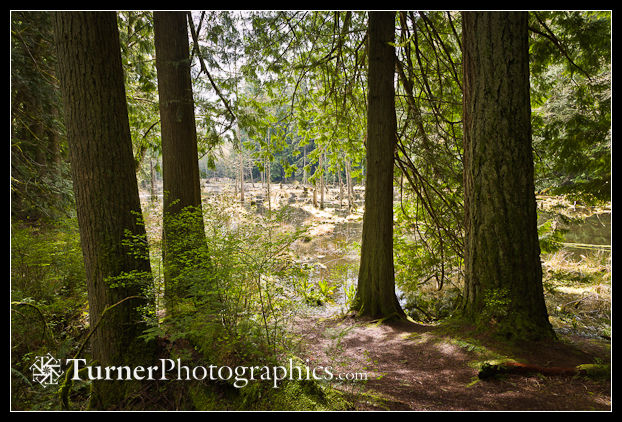
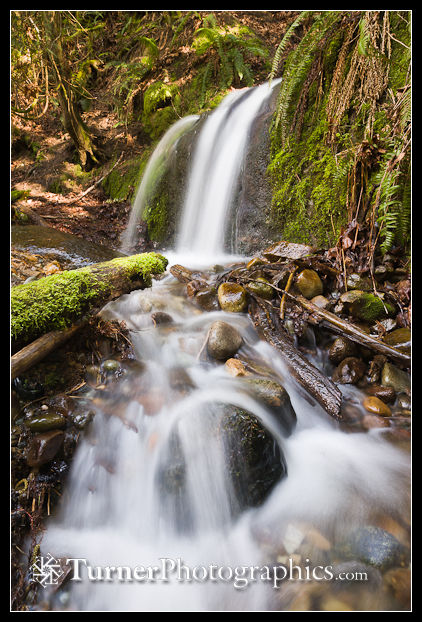
Sunday morning Natalie said, “let’s go for a walk in the woods” and I suggested we hike the loop trail at the Stimpson Family Nature Reserve near Lake Whatcom. It’s an easy 3-mile loop through nice old- and second-growth forest, perfect for a quick getaway on a morning when light rain threatened.
Beaver pond wetland
Just a tenth of a mile up the trail there’s a viewpoint to a large beaver-built wetland. This is the view from the trail, with the wetland framed by western redcedars, Douglas-firs, and red huckleberries. The wetland plants are still brown, not yet having started their spring growth in the cold water.
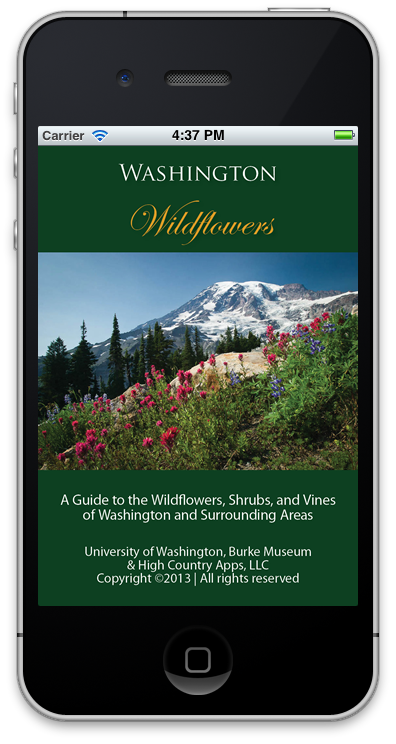
This is a birth announcement of sorts. My close friends know I’ve been working with a small team for the last several months to create a new smartphone field guide to Washington state wildflowers. Washington Wildflowers went on sale April 8. It’s been a long journey, but we think it’s worth the wait. Keep reading for links to where to purchase it.
Washington Wildflowers launch screen
University of Washington Herbarium at the Burke Museum, the authors of Wildflowers of the Pacific Northwest, and High Country Apps have partnered to produce the new Washington Wildflowers plant identification app for iOS and Android devices. The app provides images, species descriptions, range maps, bloom period, and technical descriptions for more than 850 common wildflowers, shrubs, and vines that occur in Washington and adjacent areas of British Columbia, Idaho, and Oregon. The majority of species included are native, but introduced species common to the region are covered as well in order to expand the usefulness of this resource. Most of the 850 species are illustrated with three photographs, usually a blossom detail, the entire plant, and often a habitat view. I made almost all of the photographs, the exceptions being a few plants I have yet to find. Continue reading →
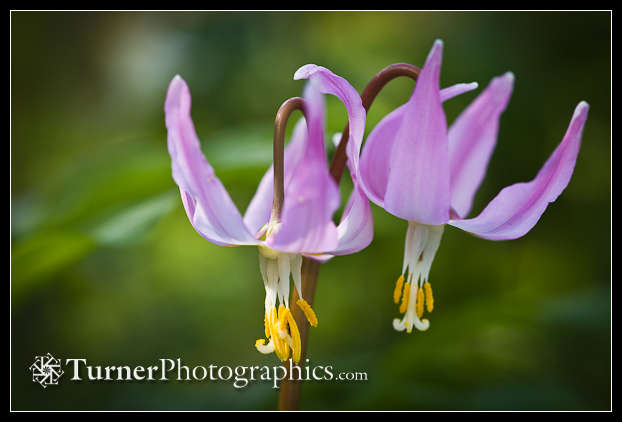
Delicate pink blossoms, pendant atop curving scapes, single or in pairs, beam a spot of color among emerging green on the forest floor this month. Coast fawn lilies (Erythronium revolutum) are one of our ephemeral spring beauties in the Pacific Northwest.
Pink Fawn Lily blossoms
Coast fawn lily, also known as pink fawn lily, favors moist shady forests, including stream banks and other wet places, near the Pacific coast from British Columbia to California. According to Flora of North America it’s rarely found more than 100 km from the coast. Distribution is sporadic, and while the species is not rare I haven’t seen it myself in very many places.
A few days ago I had a little time to kill between appointments in Fairhaven so I headed down to the North Chuckanut trailhead for Bellingham’s Interurban Trail to see what I could find. It was a glorious warm and sunny spring day, somewhat uncommon for late March around here. I didn’t have a lot of time so I didn’t hike far with my camera and tripod slung over my shoulder.
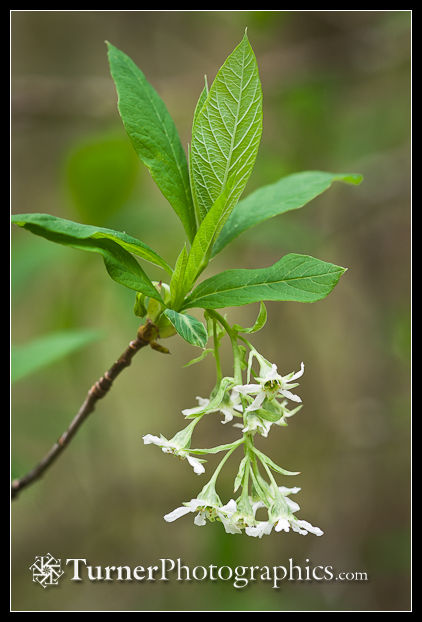
Indian Plum blossoms
Spring is in the air. Days are getting longer, the soil is warming up, we’re getting a little less rain, and buds are swelling on the trees and shrubs. Some of the catkin-bearing trees are already blooming. But one of the first real signs of spring for me in the Northwest is when the Indian plum (Oemleria cerasiformis) blossoms open. Continue reading →
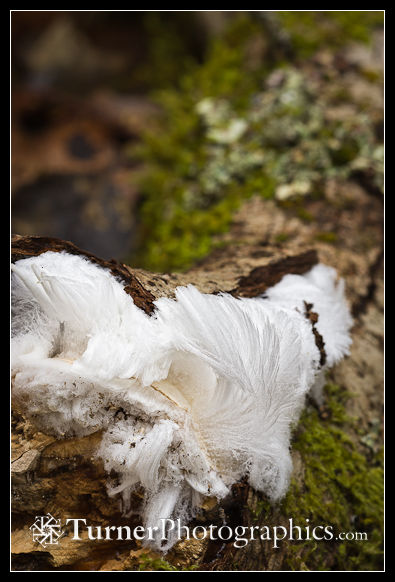
I’d never heard the term “frost flowers” until one of my editors and customers requested photographs of the phenomenon late last year. This is a natural phenomenon that occurs during the freeze-thaw cycle, or at the beginning of winter in places that don’t cycle through warm and cold periods. Continue reading →
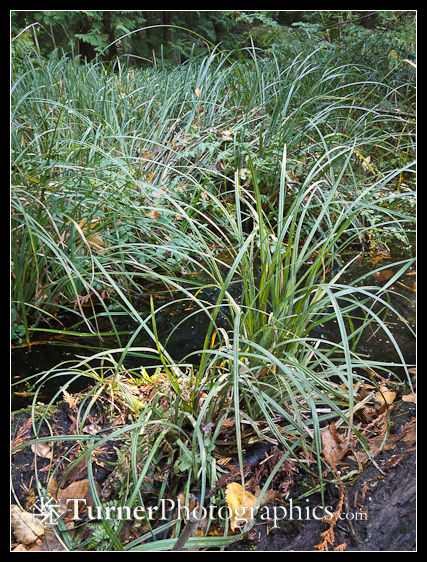
Our mild Pacific Northwest winters mean there are numerous plants that stay green year-around and they’re not all conifers. This month’s plant could easily be mistaken for some kind of grass, which it resembles at first glance. I’m talking about slough sedge, Carex obnupta.
Slough Sedge
If you’ve visited a wetland almost anywhere on the west side of the Cascades you’ve likely seen slough sedge. It’s one of our most common sedges, growing in wet places throughout our region. Continue reading →
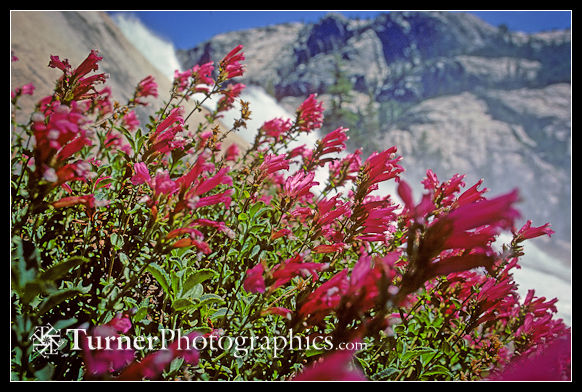
This month’s plant, a gorgeous little alpine penstemon from the Sierras, isn’t one that most people will be able to grow in their garden. I bring it to your attention because it’s one that triggers fond memories.
Mountain Pride next to a waterfall on the Tuolumne River in Yosemite National Park, 1974.
I saw Penstemon newberryi for the first time in the summer of 1974 on my first trip to Yosemite National Park. I was a 20-year old college student taking a couple of photo workshops at the Ansel Adams Gallery in Yosemite valley. I photographed this brilliant red penstemon as part of a series of images around Waterwheel Falls in the Yosemite high country. Continue reading →
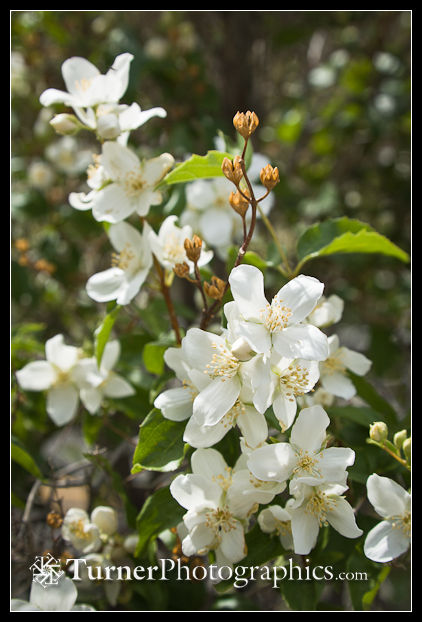
Lewis’s mock-orange, Philadelphus lewisii, is an exceptionally fragrant shrub that’s native to a wide swath of western North America from Montana and British Columbia to California. It’s more common on the dry side of the mountains, but is found in 38 of Washington’s 39 counties and 35 of 36 in Oregon. Continue reading →
When you think of dogwood, do you think of a tree or a groundcover? If you only think about dogwood trees, you’ve been missing out on one of my favorite woodland wildflowers. The smallest of our dogwoods is commonly called Bunchberry or Dwarf Dogwood. There are two species in the most populated parts of North America, Cornus canadensis and Cornus unalaschkensis. Some taxonomists lump them together and in the nursery trade it’s almost always sold as Cornus canadensis. Continue reading →