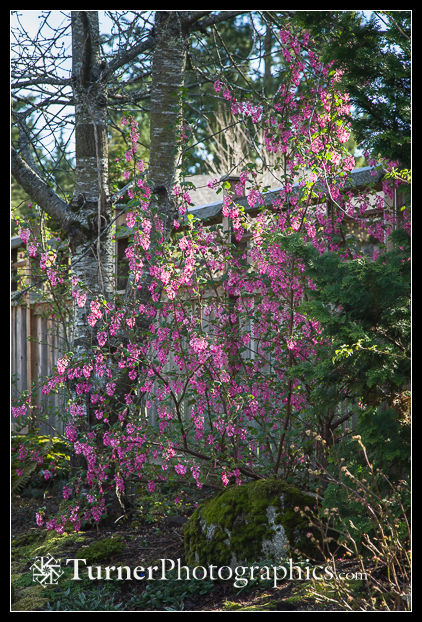
Red-flowering Currant against wooden fence in Annie & Bob’s backyard
A few days ago my friend Annie called to say her red-flowering currant (Ribes sanguineum) was about to burst into full bloom, inviting me to swing by and photograph it. She has a couple of nice shrubs against the fence in her backyard and when I visited on March 16 one of the two was in full bloom. Continue reading →
Sometimes a native species looks just like a non-native. One example, blooming now in the Pacific Northwest, is the hazelnut or filbert.
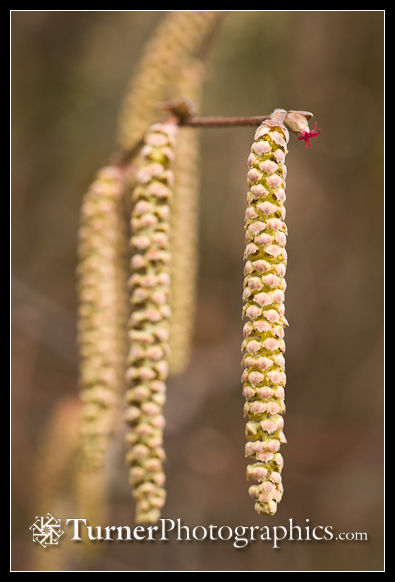
Beaked Hazelnut male catkins with a tiny female flower at the upper right.
Corylus cornuta, beaked hazelnut, is our native species. On the west coast, it’s variety californica and in the rest of the continent you’ll find variety cornuta. It usually grows as a mid-sized multi-stemmed shrub but occasionally becomes a small tree.
Almost indistinguishable, Corylus avellana or European filbert, grows in the same habitats and except when it has nuts in late summer and early autumn you’ll be hard pressed to tell them apart. It’s grown commercially in Washington and Oregon for its very tasty nuts. In orchards this species is a medium-sized tree, but escaped to the wild it usually takes the same shrub form as our native hazelnut. There are also garden cultivars of Corylus avellana, particularly the very popular contorted filbet, var. contorta that’s been blooming for a while this winter. Continue reading →
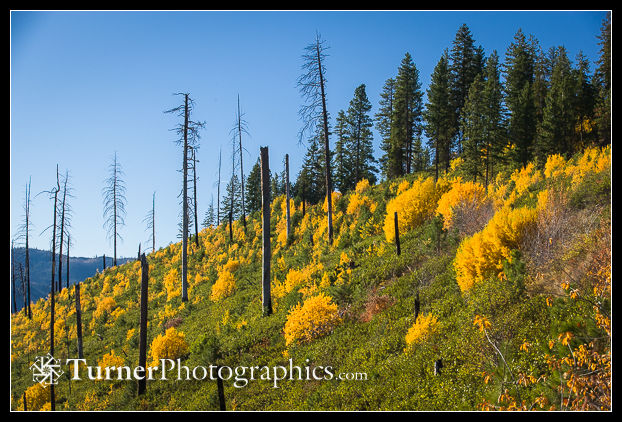
I spent a lot of time with our native willows while photographing for Trees & Shrubs of the Pacific Northwest, but never really thought about them as a spectacular part of our fall color palette. Maybe that’s because I was looking for them in flower and with fresh summer green leaves.
That changed when I drove across a Forest Service road on the Okanogan-Wenatchee National Forest west of Lake Chelan, Washington last fall on the recommendation of a fellow nature photographer. Road 5090, the Shady Pass Road, connects Lake Chelan with the Entiat valley. It climbs to around 6,000 feet and we weren’t able to make it all the way across the pass because we ran into some early season snow compacted into ice on the road. Continue reading →
I spent a couple of very enjoyable days with family foraging for mushrooms near The Mountaineers Meany Lodge just east of Snoqualmie Pass. My son Zach and his fiance Kristina invited us and her parents to join them at the annual mushroom weekend at Meany. It’s something I’ve done several times in the past, mostly in the 1990s and it had been some 10 years since I last participated.
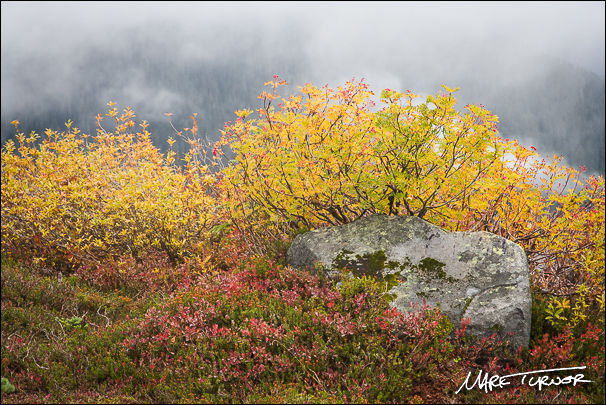
Sitka Mountain Ash and Cascade Blueberries with drifting mist
Last Saturday I made time to get out into the mountains for one of the few day hikes I’ve done all year. I went with my friends Rick Dubrow and Cindi Landreth, who were also responsible for the design and construction of my studio remodel. They own Adaptations and A-1 Builders.
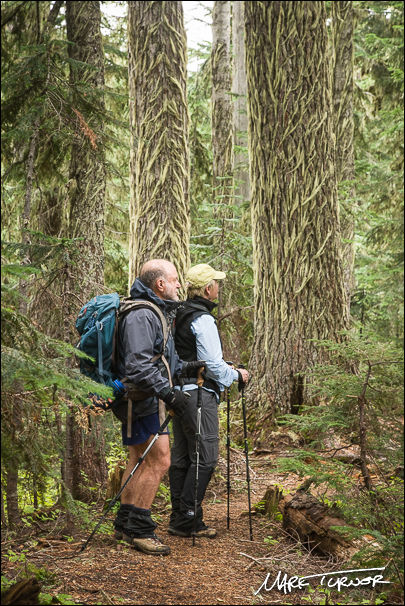
Rick Dubrow & Cindi Landreth among giant Mountain Hemlocks on the Cougar Divide trail.
We picked Cougar Divide as our destination. The road takes you to nearly 5000′ so there’s little climbing to get to subalpine ridges, meadows, and forest. It’s a long rocky ridge that leads south toward Mount Baker. The trail is an unofficial boot track that enters the Mount Baker Wilderness just a few hundred yards from the parking area. In mid-summer Cougar Divide is known for dense swarms of mosquitoes, but in the rain of early October there were none of the nasty pests buzzing about.
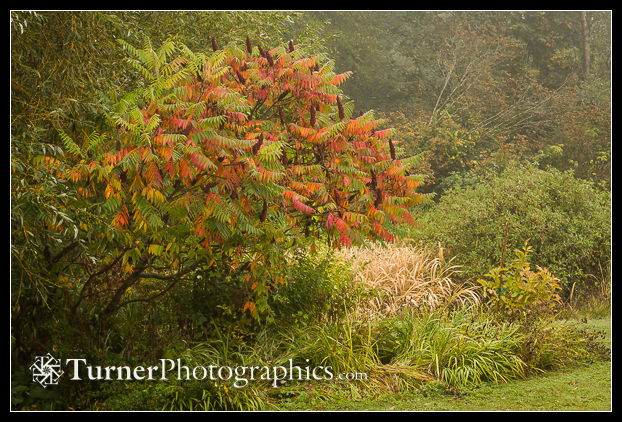
Staghorn Sumac above mixed perennial bed in our garden on September 27
As I look out the window to our garden the staghorn sumac (Rhus typhina) is beginning to turn brilliant orange, almost glowing in the soft morning light. Erect pyramidal clusters of fuzzy red seeds form soft spires against the foliage.
This large shrub is native to most of eastern North America east of the Mississippi River. It is widely planted, and thrives, in much of the rest of the continent. A mature sumac can reach 25 feet tall and equally broad. It’s often a multi-stemmed shrub, spreading by suckers arising from the roots. Staghorn sumac is often found in the wild on disturbed sites and woodland edges. Continue reading →
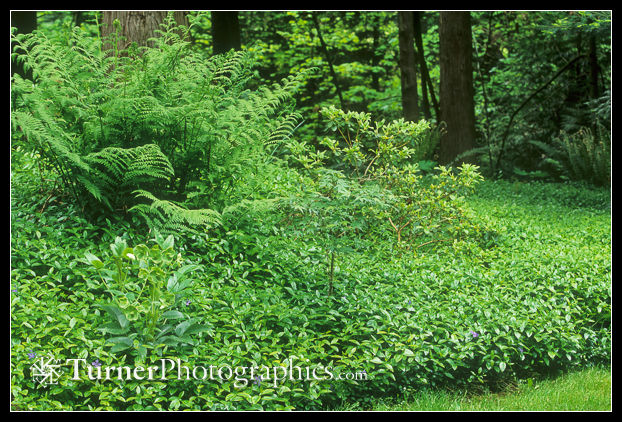
Wood Fern with Vinca minor in a garden near Bellingham
Spiny wood fern (Dryopteris expansa), is one of our woodland plants that has continued to look good through the dry days of August while some of the other perennials have gone into summer dormancy or looked tired and droopy. We have quite a lot of wood fern growing in our woods, almost always on decaying conifer logs or stumps.
This deciduous fern is easy to recognize, although with just a quick glance you could confuse it with lady fern or male fern. Spiny wood fern has fronds that are broader at the base than at the tip, with a triangular shape that tapers to a point. It gets the spiny part of its name from the chaffy brown scales along the lower part of the leaf stems. Continue reading →
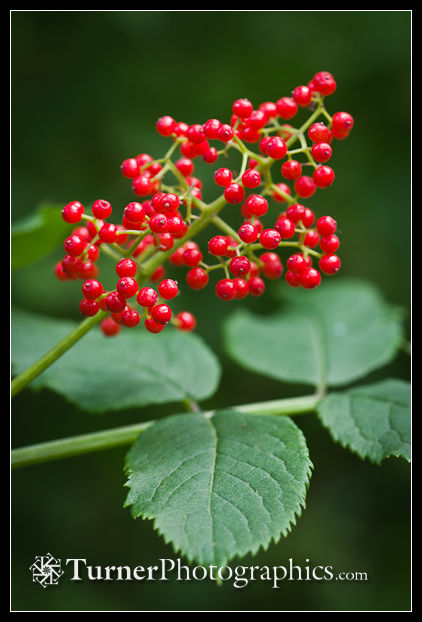
I watched our native red elderberries go through their spring progression back in March and April. They’re one of the first shrubs to start unfurling their leaves, beginning in mid-March. Now that summer is here, they’re covered in bright red fruit. There are some big patches of elderberries beside I-5 where they’re easy to spot (and identify) even at 70 mph. Of course, they’re easier to learn at a more leisurely pace in your backyard or along a quiet trail.
Here in the Pacific Northwest we have two species of elderberry. More common on the west side of the Cascades is the red elderberry (Sambucus racemosa var. racemosa). It is native to much of North America, according to USDA Plants Database. The other is blue elderberry (Sambucus nigra ssp. cerulea), which grows throughout western North America. Both species of elderberry have similar cultivation requirements, as does another species found in eastern North America. Continue reading →
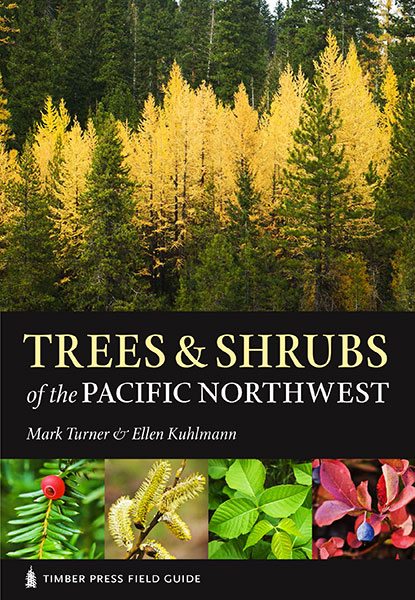
It’s been a long journey but my latest book, Trees & Shrubs of the Pacific Northwest, should be in your favorite bookstore this week. You can also order autographed copies directly from me. Ellen Kuhlmann wrote the text and I photographed all but a few of the 568 species of mostly native trees and shrubs in the book.
I began thinking about the tree book back in 2009 and began photographing a few species that year and in 2010. Ellen and I signed a contract with the publisher, Timber Press, in 2010 and then we began working on it in earnest. I spent all of the 2011 and 2012 growing seasons traveling throughout the northwest to find and photograph the plants. We delivered the manuscript and photos to Timber in 2013. It always amazes me how much time is required to edit, design, and print a book like this. Ellen and I received our first author’s sample copies about a month ago and we’re pleased with the final result. Continue reading →
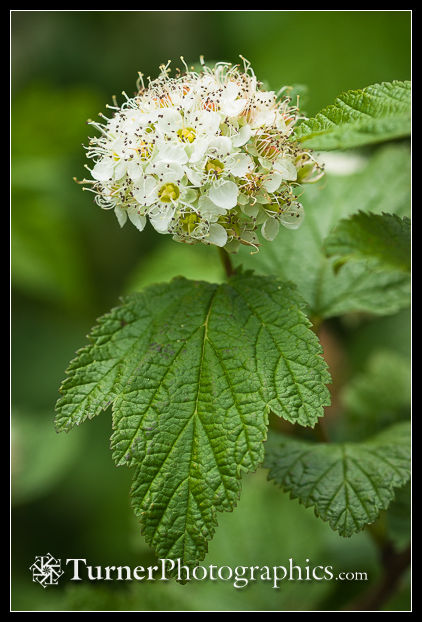
I’ve become a fan of our native ninebark, Physocarpus capitatus. It’s a big, glorious shrub. As the common name implies, the shredding bark provides year-around interest whether it really has nine layers or not. In June it is covered with ball-like clusters of small white flowers, held just above the dark green foliage. Birds eat the mature seeds in late summer and in autumn the leaves turn golden. Continue reading →


![Red-cap Bolete [Leccinum aurantiacum]](/wp-content/uploads/2014/11/Turner_1400804.jpg "1400804 Red-cap Bolete among Beargrass foliage [Leccinum aurantiacum]. Mt. Baker-Snoqualmie NF Meany Lodge, WA. © Mark Turner")